The Short Answer
Condo association fees are typically higher than HOA fees for comparable communities because condo associations are responsible for maintaining the building itself — not just shared amenities. When you own a condo, your monthly fees are paying for the roof over your head, the hallways you walk through, and the elevator you ride. HOA fees, by contrast, primarily fund common areas and amenities while each homeowner is responsible for their own structure.
What Condo Fees Pay For That HOA Fees Don't
Building exterior maintenance and repairs
The condo association pays for repairs to the building's exterior: roof, siding, windows (in many associations), and the building envelope. A roof replacement on a mid-size condo building can cost $200,000 to $800,000. That cost is shared across all unit owners through condo fees and reserve contributions.
Structural systems maintenance
HVAC systems serving common areas, plumbing to unit boundaries, electrical systems in common areas, and other building mechanical systems are the condo association's responsibility. These systems require ongoing maintenance and eventual replacement.
Vertical transportation
In multi-story condo buildings, elevator maintenance and eventual modernization is a significant ongoing expense. An elevator modernization on a mid-rise building can cost $100,000 to $250,000 per elevator.
Building insurance
The condo association's master insurance policy covers the building. In an HOA, each homeowner carries their own policy. The master policy premium is a direct operating expense funded by condo fees.
Hallways, lobbies, and common building spaces
Interior common spaces — hallways, lobbies, fitness centers, mailrooms — require ongoing cleaning, maintenance, and periodic renovation. These are condo association expenses.
Are Your Condo Fees Reasonable?
To evaluate whether your condo fees are reasonable:
**Compare to similar buildings.** Look at similar condo buildings in your area — same general age, size, and amenity level. What are their monthly fees? Wide variation can signal either a well-managed association or an underfunded one.
**Review the reserve study.** A properly funded reserve study defines how much should be contributed to reserves each year. If your monthly fees are significantly lower than the reserve study recommends, the association is underfunded — and a special assessment is likely in the future.
**Look at the operating budget.** Request a copy of the current budget. Review the major expense categories. Are vendor costs in line with market rates? Is the management fee reasonable? Are there obvious gaps?
**Check the reserve fund balance.** Ask for the current reserve fund balance and compare it to the reserve study's recommended "percent funded" target. A condo association that is less than 50% funded is at high risk of special assessments.
Frequently Asked Questions
Why are my condo fees going up every year?
Most of the large expense categories in a condo budget — insurance, vendor services, utilities — increase with inflation. Condo fees must increase at least in line with inflation to maintain the same level of services. If fees have been artificially flat for years, a larger increase is typically needed to catch up.
Can I reduce my condo fees?
The association can reduce fees by reducing services, but this typically harms the community. The better question is: are the fees being spent efficiently? Review the budget for vendor contracts that may be above market rates. Competitive bidding on major service contracts is one of the best ways to control costs.
What happens if a condo association can't pay its bills?
If an association doesn't have sufficient operating funds, it may defer maintenance (which creates larger future costs), borrow from reserves (which must eventually be repaid), or levy a special assessment. Persistent underfunding can lead to lender restrictions on mortgage approvals for units in the building.
How APM Controls Condo Association Costs
The best way to evaluate whether condo fees are reasonable is to look at what they buy. APM-managed condo communities in Michigan and the Bay Area receive real-time financial reporting through the HOA Alchemy live bank dashboard, professional vendor management with GPS-tracked contractors, and a 98% dues collection rate that ensures the revenue base stays intact.
For Bay Area communities, APM's smart irrigation remote control cuts water bills 25-35% — a meaningful reduction in one of the largest operating expenses. And because APM vendors are background-verified rather than gig workers, the board isn't taking on unknown liability every time someone shows up to do maintenance.
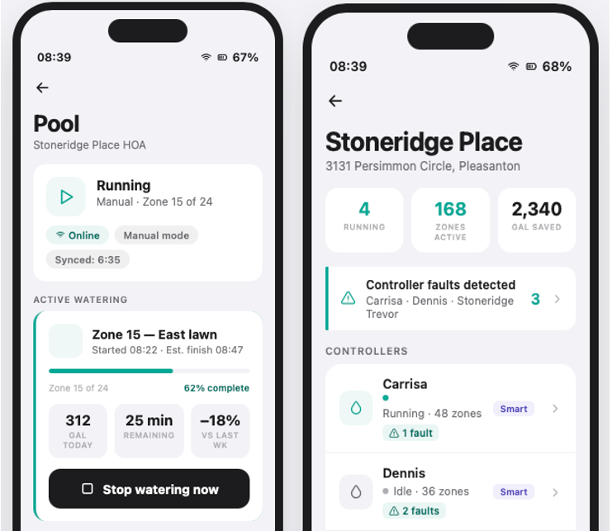
HOA Alchemy smart irrigation controls — real zones, real properties, managed remotely. This is the actual platform APM uses to cut Bay Area water bills 25–35%.
For a proposal showing how APM manages condo association costs, contact billing@apmhoa.com or visit apmhoa.com.
Ready to work with Association Property Managers?
Get a free, itemized proposal for your community — delivered within 3 business days.
Request a Free Proposal