Quick Answer
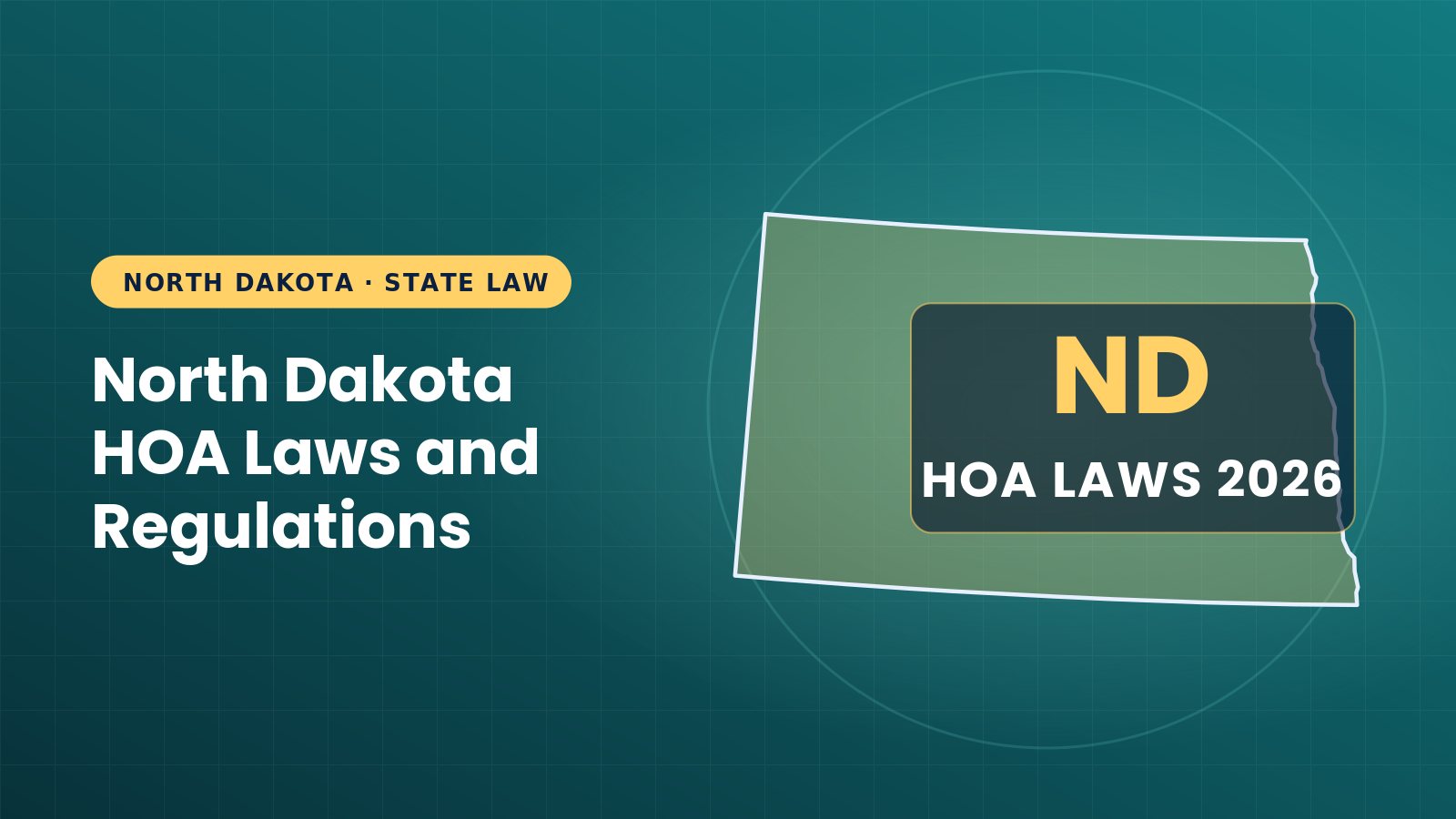
North Dakota does not have a comprehensive homeowners association act. Condominiums are governed by the short Condominium Ownership of Real Property chapter, North Dakota Century Code Chapter 47-04.1. Other associations are governed mainly by their recorded declaration and bylaws, plus the Nonprofit Corporation Act, Chapter 10-33, when incorporated under it, and general contract and property law.
Which laws govern HOAs and condominiums in North Dakota
If you are looking for a single North Dakota statute that spells out HOA budgets, reserves, election procedures and owner rights, there is not one that we could find. The Century Code chapter on condominiums is brief, and the chapter we reviewed does not address planned community associations at all. That makes your governing documents the most important source of rules.
- Chapter 47-04.1, Condominium Ownership of Real Property. Sixteen sections covering definitions, the recorded declaration, administration and bylaws (47-04.1-07), owner compliance (47-04.1-08), partition limits (47-04.1-09), liens for common expenses (47-04.1-11), political signs (47-04.1-14) and electric vehicle charging stations (47-04.1-16).
- Chapter 10-33, Nonprofit Corporation Act. Applies to associations incorporated under it. Key provisions include the standard of conduct for directors (10-33-45), director conflicts of interest (10-33-46), dues and assessments (10-33-60), member meetings (10-33-65 and 10-33-68) and books and records (10-33-80).
- Declaration, bylaws and rules. For a non-condominium community, the recorded covenants are generally the source of assessment authority, use restrictions and enforcement remedies. See HOA governing documents explained.
- Common law and general statutes. Contract, property and civil procedure rules fill gaps, and courts generally enforce properly adopted covenants as written.
Because the statutes are thin, the first practical step for a board is to confirm how the association was formed, whether it is incorporated as a nonprofit, and whether the property is a condominium under Chapter 47-04.1 or a planned community.
Key HOA rules in North Dakota at a glance
| Topic | What the law says |
|---|---|
| Assessments and liens | Condominiums: a reasonable assessment made under the recorded declaration and bylaws is a debt of the owner, and it becomes a lien when the administrative body records a notice of assessment with the county recorder (47-04.1-11). Other associations: see your declaration. |
| Records access | Nonprofit corporations must keep articles, bylaws, accounting records and six years of minutes; members may inspect for a proper purpose at any reasonable time, and the corporation may charge a reasonable copying fee (10-33-80). |
| Meetings and elections | Nonprofit corporations with voting members must hold at least an annual meeting unless the articles or bylaws provide otherwise; members may demand one if none was held in fifteen months (10-33-65). Otherwise see your bylaws. |
| Reserves | No statutory reserve requirement found in the chapters we reviewed; see your documents. |
| Fines and enforcement | Condominium owners must comply strictly with bylaws, rules and recorded covenants, and noncompliance can support an action for damages or injunctive relief (47-04.1-08). Fine procedures: see your documents. |
| Rental restrictions | No statewide rental cap statute found in the chapters we reviewed; see your documents. Bylaws may not base common charges on whether an occupant is an owner or tenant (47-04.1-07). |
| Architectural review | See your documents. Statutes limit rules on political signs (47-04.1-14) and electric vehicle charging stations (47-04.1-16) in condominium projects. |
| Board duties | For incorporated associations, directors must act in good faith, in a manner reasonably believed to be in the corporation best interests, with ordinary prudent care (10-33-45). |
Condominium rules in more detail
Chapter 47-04.1 requires unit owners to provide for administration of the project. Bylaws must address maintenance of common elements, assessment of expenses, payment of losses, division of profits and hazard insurance proceeds, and a true copy is annexed to the recorded declaration. A bylaw amendment is valid only if set out in a recorded amendment to the declaration. All bylaws, rules and regulations must be put in writing and made available to every owner, and the owners must record the name of the person or persons responsible for administrative duties who may accept legal process (47-04.1-07).
The lien mechanism is different from many states. Under Section 47-04.1-11, the assessment is a debt of the owner when made, but it becomes a lien when the administrative body records a notice stating the amount, other charges and the record owner. After payment, the administrative body must record a notice of satisfaction and release. Because the text is brief and does not describe foreclosure steps, a condominium board should consult counsel before any collection action. The chapter we reviewed does not set a priority rule or fee caps.
Section 47-04.1-14 provides that a covenant, declaration, bylaw or rule may not prohibit an owner or resident from displaying a political yard sign within sixty days before a primary, general or special election, although reasonable restrictions on placement and manner are allowed. Section 47-04.1-16 voids covenants and bylaws that effectively prohibit or unreasonably restrict electric vehicle charging stations in an owner unit or designated parking space, and provides that an application not denied in writing within sixty days is generally deemed approved, unless the delay results from a reasonable request for more information.
Section 47-04.1-09 also limits partition: owners generally cannot use the partition chapter to terminate a project, with narrow exceptions such as a project that has not been rebuilt three years after major damage, or one that is obsolete and uneconomic, where owners holding more than fifty percent of the common area interest oppose repair.
Nonprofit corporation rules that often apply
Many North Dakota associations incorporate as nonprofits, which brings Chapter 10-33 into play. Under Section 10-33-60, when the articles or bylaws give authority to do so, a corporation may levy dues, assessments or fees, and the documents may set the method of collection and provide for enforcement. Section 10-33-80 gives members a right to inspect corporate records for a proper purpose, and a member wrongfully denied access may seek injunctive relief, damages, costs and reasonable attorney fees. For a plain-language look at director roles, see HOA board member responsibilities, and for how authority is limited, see what powers an HOA has.
Recent changes
The condominium chapter has been updated at the margins, for example with the political sign and electric vehicle charging provisions. We summarize developments in North Dakota HOA law changes 2021-2025. We did not identify a new comprehensive HOA act as of the verification date.
Remote HOA management in North Dakota
With few statutory mandates, North Dakota boards rely on clear processes, and remote management supports that. A cloud dashboard keeps declarations, budgets, minutes and financial statements in one place, which helps satisfy record-keeping duties. Online dues collection and digital violation tracking create a consistent paper trail, and board support by phone, email and video lets directors in Fargo, Bismarck or a small lake community get help without waiting for an in-person visit. Learn about remote HOA management in North Dakota and pricing.
Rules on manager licensing and registration vary by state, so associations should confirm what applies in North Dakota, including whether any real estate licensing rules reach the services a manager will perform. We did not verify a North Dakota community association manager license for this guide.
Frequently Asked Questions
Does North Dakota have an HOA act?
Not a comprehensive one that we could find. Condominiums fall under Chapter 47-04.1, and other associations rely on their documents and, if incorporated, Chapter 10-33.
Can I inspect my North Dakota association records?
If the association is a nonprofit corporation, Section 10-33-80 lets members inspect records for a proper purpose at any reasonable time. Condominium owners may also have rights under their bylaws. Check your documents for procedures.
How does a condominium lien work in North Dakota?
Under Section 47-04.1-11, an assessment becomes a lien when the administrative body records a notice of assessment with the county recorder. Consult an attorney before relying on it for collection.
Can my North Dakota HOA ban political signs?
For condominium projects, Section 47-04.1-14 does not allow a prohibition on political yard signs within sixty days before an election, but reasonable placement rules are allowed. For other associations, check your documents and consult counsel.
Are there statewide rental caps for North Dakota HOAs?
We found none in the statutes we reviewed. Rental limits generally come from recorded covenants. See HOA rental caps.
How APM Helps
Association Property Managers provides remote HOA and condo management for boards nationwide, including accounting, assessment collection, violation tracking and meeting support. See our association management services or request a free proposal, delivered within 3 business days. Questions about the basics? Read what is HOA management.
This article is general information, not legal advice. Laws change and associations differ; consult a licensed attorney in North Dakota. Last verified October 25, 2026.
Ready to work with Association Property Managers?
Get a free, itemized proposal for your community — delivered within 3 business days.
Request a Free Proposal